Power of Positive Self Talk: Reprogramming Your Inner Voice
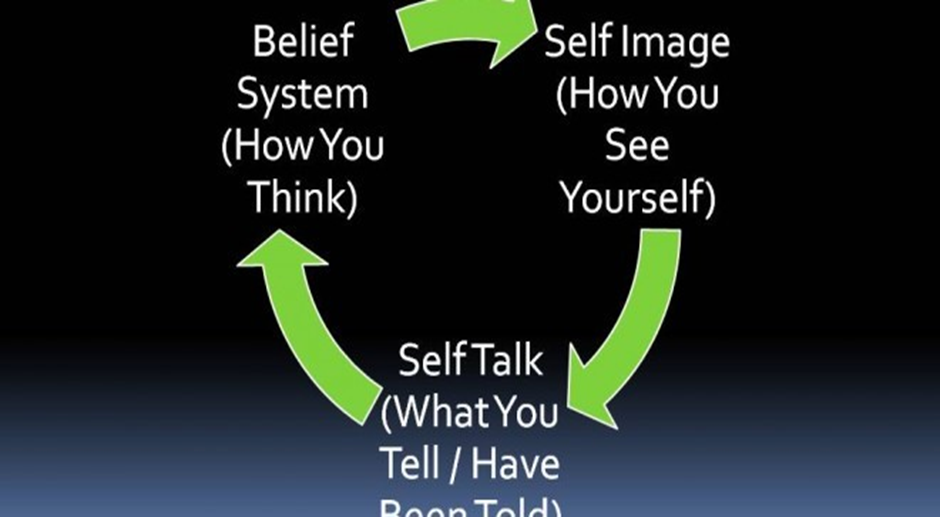
Close your eyes for a moment. Imagine sitting in a quiet room. No TV, no phone, no chatter around you. Silence. And in that silence, one voice remains—your inner voice.
It speaks when you succeed, it speaks when you fail, it speaks when you’re unsure of yourself. But here’s the catch: most of the time, that inner voice isn’t neutral. It has been programmed, layer by layer, by years of experiences, criticism, praise, comparisons, and fears. Some of us unknowingly carry a harsh inner critic for decades. Others learn to carry a gentle coach.
The truth? Reprogramming your inner voice is possible. And it begins with understanding the power of positive self-talk.
The Invisible Script Running Your Life
Think of your mind as a theatre. Your inner voice is the scriptwriter. The show is your daily life.
When the script says: “You’re not good enough,” the actor on stage—you—delivers a shaky performance. But when the script says: “You are strong. You are learning. You will handle this,” the performance shifts.
The audience (your colleagues, family, society) sees a completely different play. And all of this transformation comes from a script that nobody else even hears. That is the power of positive self talk—invisible but deeply influential.
Why Negative Self Talk Feels Natural
Let’s be honest. If positive self-talk is so powerful, why don’t we use it more often? The answer lies in survival.
Human brains evolved to notice danger. Thousands of years ago, if our ancestors saw a shadow in the bushes, the inner voice screamed: “Careful! It might be a predator!” That negativity bias kept them alive.
Fast forward to today. The bushes are gone, but the habit remains. Our inner voice often leans negative—not because we are weak, but because the brain is wired to be cautious.
That’s why reprogramming your inner voice is not about pretending everything is perfect. It’s about retraining the brain to distinguish between real threats and imaginary fears.
The Science Behind Positive Self Talk
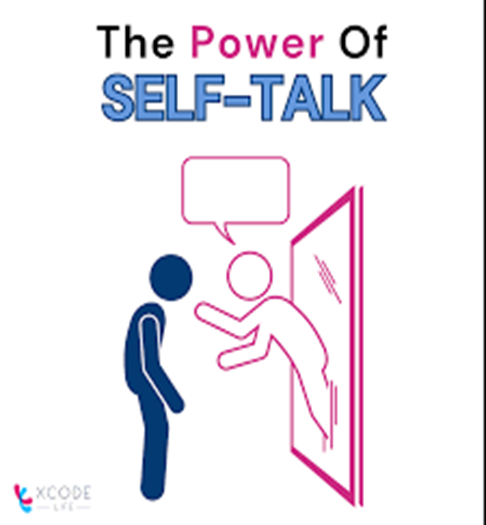
Modern neuroscience backs this up. Studies show that when people practice positive self-talk, their brain’s neural pathways literally change. Self-talk impacts:
Stress levels (calmness increases)
Confidence (belief in one’s own ability grows)
Performance (athletes, public speakers, leaders all use it as a mental training tool)
The power of positive self-talk is not magic. It’s biology. Your subconscious accepts repeated thoughts as truth. That’s why affirmations and mantras—when spoken regularly—become powerful tools for reprogramming your inner voice.
Practical Ways to Reprogram Your Inner Voice
Let’s turn theory into practice. Here are steps to rewire your self-talk:
Catch the Negative Pattern
Pay attention to phrases you repeat: “I’m not good enough,” or “I always mess up.” Awareness is step one.
Interrupt the Cycle
When you notice negativity, pause. Literally say “Stop” in your head. That creates space for change.
Flip the Statement
Turn “I’ll never get this right” into “I am improving every attempt.” At first, it feels fake. With repetition, it becomes natural.
Anchor with Evidence
Back up positive self talk with examples: “I handled a similar challenge last month, I can do this again.”
Practice Daily Repetition
Just like brushing your teeth, make self-talk hygiene a habit. 21 days of repetition can build a new mental pattern.
A Story That Proves the Point
Years ago, a young tennis player was famous not for his wins but for his outbursts. Every mistake led to muttering: “I’m terrible. I can’t do this.” His coach noticed and gave him a simple rule: after every mistake, he must say out loud, “Next point, my game.”
At first, he laughed. But slowly, his inner voice shifted. The results? His focus improved, his errors reduced, and he climbed the rankings.
The story is real, but the principle is universal: power of positive self talk can rewire even the most stubborn critic inside you.
Your Inner Voice Shapes Your Outer World
Here’s something to remember: the way you speak to yourself sets the tone for how others treat you. If you constantly belittle yourself, others pick up that energy. If you carry yourself with self-assurance—nurtured by positive self talk—people sense it too.
That’s why reprogramming your inner voice is not just self-care. It’s leadership. It’s parenting. It’s relationships. It’s every aspect of life.
A Small Exercise for You
Right now, take out your phone or notebook. Write one sentence you often tell yourself when things go wrong.
Now rewrite it into a positive, empowering version.
For example:
Original: “I always fail at this.”
Rewritten: “I’m learning the skills I need, and each attempt takes me closer to success.”
Read it aloud. Notice the difference in how it feels. That’s step one of reprogramming your inner voice.
Closing Thought
At the end of the day, life will always present challenges. But whether you face them as your own enemy or as your own best friend depends on the voice inside you.
Remember:
Negative self-talk drains your power.
Positive self-talk builds your power.
Reprogramming your inner voice puts you in control.
The power of positive self-talk is not about ignoring reality. It’s about creating the courage to face reality with clarity, strength, and resilience.
So the next time your inner critic whispers, pause. Smile. And replace it with words that lift you higher. Because the loudest voice you’ll ever hear is your own—and it has the power to shape everything that follows.
For more such amazing content visit : https://insightsphere.in/







2 comments