“IndiGo COLLAPSE: How India’s No-1 Airline Grounded Thousands & Left Travellers Stranded”
✈️ What Happened: A Sudden Collapse in IndiGo Flight Operations
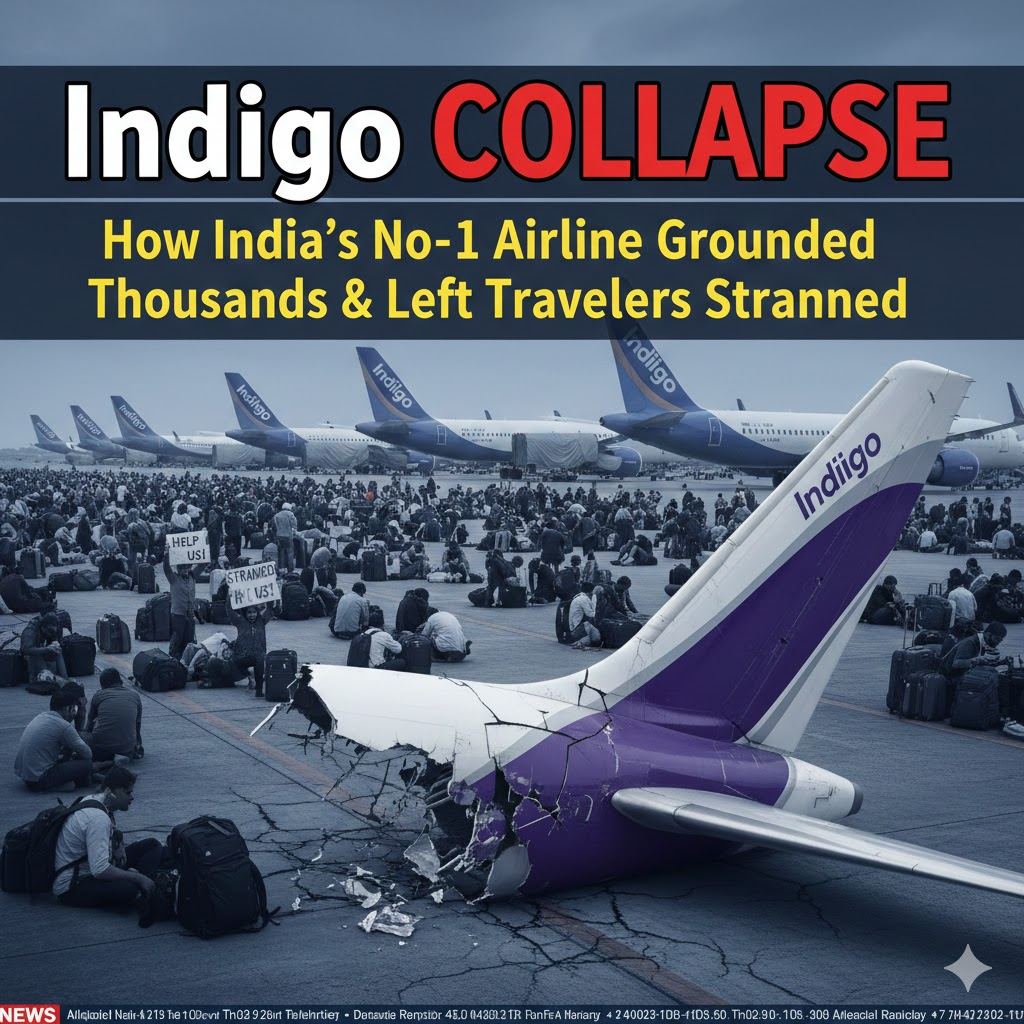
In early December 2025, IndiGo — India’s largest domestic airline — triggered one of the worst crises in Indian civil aviation in recent memory. Over a single week, the airline cancelled more than 2,000 flights, threw the schedules of tens of thousands of passengers into disarray, and plunged major airports into chaos.
The disruption was especially severe between December 2–5. On Friday (December 5), for example, upwards of 1,000 flights were cancelled across the network, including all domestic departures from key hubs like Delhi.
At its worst, the company scrapped over 560 flights in a single day from just six metro airports, stranding hundreds of travelers.
Even after a few days, the disruption continued — Delhi, Bengaluru, Chennai, Hyderabad, Ahmedabad, Jammu, and other airports saw dozens or hundreds of cancellations daily.
The fallout was intense:
- Long queues at airports, chaotic counters, frustrated passengers with missed flights, weddings postponed, business travel disrupted.
- Ticket fares on alternate flights skyrocketed — some routes saw a 4× increase.
- Baggage delays, missing luggage, and passengers forced to sleep in terminals while scrambling for refunds or rebooking.
Passengers vented their anger online and at airports. On social media and community forums, several described scenes of “utter pandemonium.” For instance, one user on Reddit from Bengaluru wrote:
“At BLR and my flight was cancelled too — no message, no call, nothing. … by 9 AM — easily 50+ flights.”
Another from Delhi recalled being “stuck at the airport all night” with mass cancellations and loud arguments with staff.
🔎 Why It Happened — The Underlying Causes
While the chaos seems sudden, the roots lie in a mix of regulatory changes, mismanagement, and operational stress.
New Crew Rest Rules (FDTL) & Tight Roster Compliance
In January 2024, the national aviation regulator DGCA implemented stricter norms for pilots and cabin crew — extended weekly rest, reduced night-landings per roster cycle, tighter limits on duty hours.
Although airlines had about two years to prepare, the implementation hit full scale in November 2025 — and for IndiGo, the transition was evidently rocky. The airline reportedly failed to rework crew rosters suitably, did not hire additional staff, and maintained a hiring freeze along with non-poaching agreements and pay freezes for pilots.
Massive Size, Overnight Operations & Lean Staffing Strategy
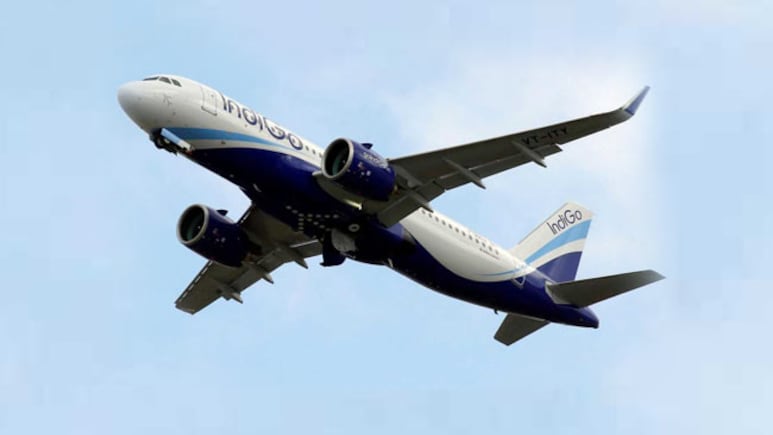
IndiGo runs a massive network: more than 2,200 flights daily, much higher than many competitors.
As a low-cost carrier, it historically optimized for high-frequency overnight flights, minimizing downtime. That model now directly conflicts with the rest-hour constraints under the FDTL rules.
Because of such scale, even a small percentage drop in crew availability translates to hundreds of flight cancellations daily.
Compounding Operational Pressures
Crew shortage was the core problem — but it was compounded by “minor technical glitches, winter-schedule shifts, increased airspace congestion, and adverse weather,” per the airline’s statement.
These multiple stressors combined triggered a cascading collapse in scheduling, making it impossible for IndiGo to recover quickly.
Regulatory & Planning Oversight
Critics — including pilot bodies — have slammed IndiGo’s “unorthodox lean staffing strategy,” attributing the crisis to poor planning rather than external factors.
Even though the newer rest-duty norms have been public for over a year, IndiGo allegedly delayed roster changes and contingency staffing, failing to anticipate peak-season rush and holiday travel.
🎯 Who Bears the Brunt: Passengers, Airports, and Indian Aviation overall
Travellers — Stranded, Angry, Disillusioned
For many, this wasn’t just a delayed flight. Weddings, official trips, holidays — all plans went haywire. The sudden cancellations offered little notice; many passengers reported reaching airports only to be told their flights were cancelled with no calls, no SMS, no prior warning.
Refunds became a nightmare: long queues at counters, hundreds of people crowding airports, uncertain timelines for refunds or rebooking — some estimated 5–7 business days even for refunds.
Cost was another blow: alternate flights, if available, often came at four-times the usual price. For many, the only option was to wait it out — or consider trains/buses instead of flying.
Airports, Staff & Other Airlines — Collateral Damage
Major airports like Delhi, Mumbai, Bengaluru, Hyderabad, and others turned chaotic. Terminals were crowded, staff overwhelmed, baggage handling delayed, and security personnel sometimes had to intervene as frustrated passengers protested.
Furthermore, other airlines reportedly faced spill-over issues: with IndiGo aircraft occupying parking bays, availability for other carriers got restricted — though those airlines themselves allegedly continued operations mostly unaffected.
Aviation Sector & Regulatory Fallout — The Big Picture
The crisis exposed a broader systemic vulnerability: how over-dependence on a single airline — in this case, IndiGo, which controls ~65 % of the domestic market — can cripple an entire nation’s air travel if things go wrong.
Financially, IndiGo faces significant damage: refunds already crossed several hundred crore rupees.
More damaging perhaps — the brand trust has taken a hit, and confidence in airline reliability has shaken among frequent flyers.
The turmoil has triggered urgent scrutiny from the regulator — DGCA (Directorate General of Civil Aviation) has issued show-cause notices to IndiGo and demanded a root-cause analysis.
There are growing calls for more competition in the Indian aviation market, better contingency planning, and stricter accountability when one carrier dominates to such a massive extent.
🛑 Passenger Voices — Rage, Despair & Betrayal
Real-life accounts from social media forums and airport eyewitnesses paint a bleak picture. On Reddit forums like r/bangalore and r/airtravelindia, many travellers described chaos, miscommunication and utter helplessness.
One user posted:
“At BLR … my flight was cancelled too — no message, no call, nothing. … 50+ flights.”
Another lamented:
“We pay a premium for air travel in this country. Ten times the cost of a bus or unreserved train. Supposedly for better service … what we got: silence from the airline.”
Some pointed out the plight of vulnerable flyers — families, seniors, people on urgent medical or work trips — who were left stranded without clarity, help, or alternate arrangements.
Meanwhile, many expressed feeling betrayed by what they believed was a “reliable, budget-friendly” airline — with one Redditor summing it up as “a system that doesn’t know what it’s doing.”
🧑⚖️ What Are the Authorities & IndiGo Doing — Damage Control
- The government’s aviation ministry stepped in. It ordered IndiGo to complete all refunds by 8:00 PM, December 7 and barred the airline from charging re-scheduling fees for affected passengers.
- IndiGo has reportedly refunded passengers over ₹610 crore so far.
- The DGCA issued a “show-cause” notice to IndiGo’s top brass, asking for a thorough explanation of the disruptions, and granted a 24-hour extension for their response.
- IndiGo has requested temporary relief from certain aspects of the new crew rest regulations to stabilize operations — and is hoping for normalization between December 10–15.
Whether these steps — refund processing, regulatory oversight, temporary rule relaxations — will restore travellers’ faith and guarantee reliability remains to be seen.
🧐 What This Means for Indian Aviation — Lessons & Risks
- Over-reliance on one airline is dangerous. IndiGo’s dominant ~65% domestic market share means its failure affected the entire aviation ecosystem. When one carrier falters, it can paralyze travel for millions.
- Regulatory compliance must go hand-in-hand with contingency planning. Mandating better rest for pilots — a legitimate safety measure — is only effective if airlines proactively adjust crew strength and scheduling well in advance. IndiGo’s delayed roster changes exposed its poor planning.
- Transparency and communication during crises matters. Many travellers pointed out lack of prior notice, no messaging, no clarity — that fuels frustration and erodes trust even more than the cancellation itself.
- Need for stronger competitor airlines and better capacity buffer. For Indian aviation to stay resilient, the market must avoid over-consolidation — and encourage multiple players who can share burden during surges or regulatory disruptions.
- Consumers may rethink: cost vs reliability. Low-cost carriers like IndiGo built their reputation on affordability and frequent flights. But when service fails so spectacularly, flyers may re-evaluate if the low cost is worth the risk — and pay more for reliability (or even shift to trains/other transport).
✅ What Should Travellers Do If You’re Flying Soon (or Have Bookings)?
- Always check flight status before leaving for airport. Things remain fluid as the airline restores operations.
- Keep refund/rescheduling receipts safe. If your flight gets cancelled, you may be entitled to full refund or free rebooking — and government order bars re-scheduling fees.
- Have backup plan. Given fare surges and network instability, consider alternate airlines, trains/buses, or shift travel dates if possible.
- Be patient, but assertive. If you face delays, missing luggage or poor communication — request written confirmation, keep logs, and raise complaints if needed.
🎯 Final Thoughts: More Than Just a Technical Glitch — A Wake-Up Call
The recent collapse of IndiGo’s flight operations is not just a story of cancellations and angry passengers — it’s a stark reminder of the fragility of large-scale aviation systems that combine low-cost models, high frequency operations, and minimal buffer staffing.
While the new crew-rest norms imposed by the DGCA were meant to improve safety, the fallout reveals a serious lack of preparedness, strategic foresight and risk management at an airline whose network touches almost every corner of India.
For travellers, it’s a wake-up call: in 2025, even the “trusted” budget carrier can leave you stranded. For Indian aviation policy and industry stakeholders, it’s a moment for reflection — and reform. The sector must build resilience: diversify market players, encourage contingency capability, and ensure regulatory changes do not translate into systemic collapse.
Only then can flying in India be more than just cheap — and actually dependable.
For More Such Amazing Content Please Visit : https://insightsphere.in/
ALSO DO CHECKOUT OUR OTHER ARTICLES :






Post Comment