SC Clears Supreme Court of India: Pilot of Air India 171 Crash Not at Fault
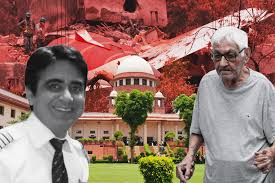
that his son is not to blame. This blog examines the court’s remarks, the investigation, public perception, institutional implications and what’s next.
1. Introduction
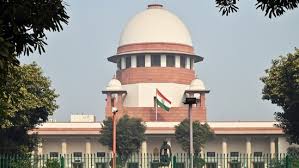
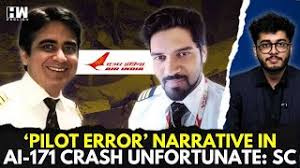
On 7 November 2025, in the case of the tragic crash of Air India flight 171 (a Boeing 787-8 Dreamliner) near Ahmedabad that claimed 260 lives, the Supreme Court of India (SC) delivered a remarkable assurance. While hearing a petition filed by the pilot’s father, the court stated that the deceased pilot is not to blame and that his father “should not carry the burden that your son is being blamed”.
This blog explores this The Supreme Court has unequivocally told the father of the pilot in the Air India 171 disaster development in detail: what the court said, why it matters, how the investigation has unfolded, and what the implications are for aviation safety, public trust and institutional accountability.
2. What the Supreme Court Said
- A bench of Justices Surya Kant and Joymalya Bagchi heard the plea of 91-year-old Pushkar Raj Sabharwal, father of the late Commander Sumeet Sabharwal, pilot-in-command of the flight.
- The Court said: “It’s extremely unfortunate that this crash took place … but you should not carry this burden that your son is being blamed or accused of anything … nobody can blame him for anything.”
- The Court noted that the preliminary report from the Aircraft Accident Investigation Bureau (AAIB) showed no insinuation of fault against the pilot: “One pilot asked whether the fuel was cut off etc, the other said no. There is no suggestion of fault in that report.”
- The bench also responded to media reporting (notably in the foreign press) that suggested pilot error, saying they are “not bothered by foreign reports. That is nasty reporting. No one in India believes it was the pilot’s fault.”
- The Court issued notice to the Union government and the aviation regulator (DGCA) and scheduled further hearings (next date Nov 10) on pleas for independent/judicially monitored investigation.
3. Why This Statement Is Notable
3.1 Regaining Dignity for the Pilot & Family
The pilot, Sumeet Sabharwal, died in the crash. In the wake of early reports & speculation, there were serious concerns that blame (in public perception) might fall on him. This public assurance by the Supreme Court helps restore his professional reputation and gives solace to his grieving family.
3.2 Institutional Trust & Investigation Integrity
- The case underscores the importance of independent, transparent investigation mechanisms after catastrophic aviation accidents. The father’s petition argued the AAIB probe was not fully independent. Business Standard+1
- The Court’s remarks signal that moral-burden and reputational consequences for a deceased professional must be addressed, especially when early narratives blame individuals while investigation continues.
3.3 Media & Public Narrative
The SC’s sharp remarks about “nasty reporting” and foreign press speculation underscore how media narrative can influence public perception prematurely. That puts a spotlight on responsible reporting in aviation disasters.
3.4 Aviation Safety & Regulator Accountability
By intervening and issuing notices, the Court emphasises that systemic, technical and procedural factors must be analysed, not just pilot error. This can lead to broader changes in safety culture and regulatory oversight in civil aviation.
4. The Investigation Context
4.1 The Crash & Early Findings
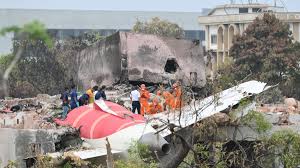
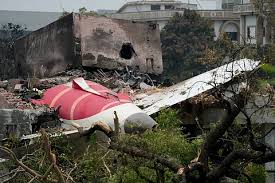
- The crash occurred on 12 June 2025, when an Air India Boeing 787-8 Dreamliner crashed shortly after take-off from Ahmedabad, killing 260 people (on board + ground).
- The AAIB’s preliminary report released in July indicated that engine fuel switches on the aircraft were moved from “RUN” to “CUTOFF” shortly after takeoff.
- The report included cockpit voice recorder (CVR) lines: one pilot asks the other “Did you switch off the fuel?” the other says “No”. The report stops short of attributing fault.
4.2 The Plea for Independent Investigation
- The father of the pilot, with the Federation of Indian Pilots (FIP), filed a petition arguing the investigation lacked independence, and sought a panel headed by a retired Supreme Court judge with independent aviation experts.
- The Court accepted this plea to some extent by issuing notices and scheduling further hearing.
4.3 Media Speculation & Foreign Reports
- A report by the Wall Street Journal had suggested pilot error based on unnamed Indian sources, fueling speculation. The Court declared such reporting “nasty” and said it would not influence the judicial process.
- Pilot unions and the father accused investigators of improper insinuations and leaks that pointed toward the deceased pilot’s culpability.
4.4 What Remains to Be Investigated
- The final cause(s) are yet undetermined. Key issues: system failures (fuel switch mechanism, Aircraft RAT system), human factors (pilot decision-making under stress), regulatory/regulator oversight (DGCA role), manufacturer role (Boeing’s 787 series).
- The Court’s intervention suggests there is national concern about completeness, impartiality and independence of the inquiry.
5. Implications & Broader Lessons
5.1 For the Aviation Sector
- The assurance from the Supreme Court may encourage more rigorous standards for accident investigation: full independence, involvement of external experts, transparency in leaks and communication with families.
- It underscores the need for no premature attribution of blame, especially when investigations are still ongoing. This is critical for flight-crew morale and aviation safety culture.
5.2 For Families & Professionals in High-Risk Roles
- The statement has a powerful message: grief and guilt of family members, particularly when a beloved professional dies in an accident, must be addressed. The dialogue in courts or inquiry must protect dignity.
- This may set precedent for how institutional responses handle families of deceased professionals in large-scale disasters.
5.3 For Media & Public Discourse
- The case acts as a caution: speculation without full facts, especially in aviation tragedies, can lead to reputational damage. Both media outlets and public opinion must exercise restraint.
- The SC’s comment on “nasty reporting” may influence how media cover future disasters — emphasising verified facts, avoiding presumption of pilot error.
5.4 For Regulatory & Institutional Accountability
- Regulators (DGCA), investigation bureaus (AAIB) and manufacturing companies will face increased scrutiny. The investigation’s outcome may lead to policy changes regarding aircraft system design (e.g., fuel switch mechanisms), pilot training, accident reporting protocols, and investigator independence.
6. What’s Next — The Road Ahead
- Hearing on 10 November 2025: The Supreme Court will continue the matter, likely examining whether the investigation should shift to a fully judicially-monitored independent panel.
- Final Report of AAIB / Judicial Panel: The conclusive cause of the crash must be established — including technical malfunction, human factor, design fault or combination.
- Regulatory Reforms: Based on findings, changes may follow in aircraft certification, pilot oversight, investigation process in India.
- Media Protocols: Possibly enhanced protocols for leak management during investigations, especially when deceased personnel cannot defend themselves.
- Legacy & Lessons for Air India, Boeing, Pilots: Whatever the cause, the industry will reflect on this incident as a major learning moment for global aviation safety — especially given the profile (Indian carrier, new wide-body aircraft) and scale (260 lives lost).
7. Conclusion
The statement from the Supreme Court that the pilot of Air India 171 “is not to blame” and that his father “should not carry this burden” is significant on many levels: human, professional, institutional and societal.
It reminds us that in the immediate aftermath of tragedy, we must guard against hasty judgments; that professionals who pay the ultimate price must be treated with dignity; and that investigation systems must be beyond reproach.
As the investigation continues, India’s aviation community—and society at large—must keep in mind that explanations matter, but so does the process and the empathy shown to those left behind.




Post Comment