Problem Awareness in Companies: Why Seeing Problems Early Defines Success
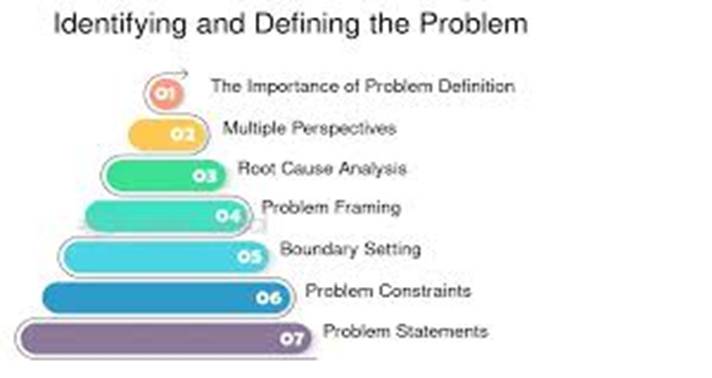
Learn why problem awareness is critical in companies. Discover the awareness gap between employees and leaders, strategies to bridge it, and real-world examples of success and failure.
Why Awareness Is More Important Than the Problem
Every company has problems. Machines malfunction, employees lose motivation, customers complain, or competitors disrupt the market. But the biggest danger isn’t the problem itself—
It’s not being aware of the problem at the right time.
Just like a medical condition, if a disease is diagnosed early, it can be cured or managed. But if ignored, it spreads and becomes fatal.
Organizations collapse not because they had issues, but because they didn’t recognize them in time or refused to act. This is where the concept of problem awareness comes in.

What is Problem Awareness in Companies?
Problem awareness refers to the extent to which issues inside an organization are recognized and acknowledged.
But here’s the catch: awareness is not equal at all levels.
- Frontline employees usually see most of the problems—they’re closest to the customers, processes, and day-to-day challenges.
- Middle managers see fewer, as much information gets filtered or ignored.
- Senior executives often see the least—they’re farthest from the ground reality.
This creates what’s called the Awareness Gap.
Understanding the Awareness Gap
1. Hierarchical Discrepancy
Research shows that frontline staff identify the highest number of issues, while leadership has the least awareness. This is natural, because leaders are focused on strategy, not daily details.
2. Visibility Gap
This difference in perception creates a visibility gap. Leaders think things are fine, while employees face daily frustrations. The result? Unsolved problems pile up, leading to inefficiency, frustration, and even project failure.
According to workplace insights shared on LinkedIn, transformation projects often fail not because of strategy, but because leaders don’t see the real ground-level problems.
The Cost of Low Problem Awareness
When companies fail to recognize problems early, the consequences multiply:
- Failed Transformations: Change projects collapse because leadership misses hidden obstacles.
- Employee Disengagement: Workers stop raising concerns when they feel unheard.
- Financial Losses: Small ignored inefficiencies snowball into massive cost leakages.
- Reputation Damage: Customer complaints left unaddressed can go viral in today’s social media-driven world.
- Missed Innovation: Opportunities are lost when problems are hidden rather than solved.
Strategies to Improve Problem Awareness
Bridging the awareness gap requires deliberate effort. Here are strategies companies can use:
1. Build a Culture of Open Communication
Encourage employees to feel safe in sharing issues. Replace the culture of blame with a culture of learning.
Example: Google’s open forums like “TGIF meetings” allowed employees to question even the CEO directly. This transparency helped Google detect cultural and operational problems early.
2. Empower Employees to Act
Don’t make every problem pass through long chains of approval. Empower employees to solve issues within their scope.
Example: Toyota’s famous “Andon Cord” system gives any worker the authority to stop the assembly line if they notice a defect. Instead of being punished, they are rewarded for saving the company from bigger losses.
3. Implement Feedback Mechanisms
Use regular surveys, suggestion boxes, or anonymous digital tools to gather employee concerns.
Example: Infosys runs frequent engagement surveys, which help management identify dissatisfaction before it leads to mass resignations.
4. Create Cross-Functional Problem-Solving Teams
Problems are often hidden between departments. Having cross-functional teams ensures multiple perspectives are included.
Example: In product development, involving people from sales, marketing, design, and customer support ensures no blind spot is left unchecked.
5. Invest in Training & Problem-Solving Skills
Employees should be trained in recognizing, analyzing, and solving problems systematically (e.g., through root cause analysis, Six Sigma, or design thinking workshops).
6. Use Data Analytics Wisely
Track leading indicators—like customer complaints, employee turnover, and process delays. Don’t just collect data; interpret it to uncover hidden issues.
7. Reward Honesty, Not Just Success
Recognize people who highlight problems early, even before a solution is found. This shifts the mindset from “don’t report issues” to “help the company improve.”

📖 Real-World Case Studies
Kodak: Blindness to Change
Kodak engineers invented the digital camera in the 1970s. But management ignored it, fearing it would hurt their film business. By the time they acknowledged the problem, competitors had taken over.
Nokia: Missed Smartphone Revolution
Despite warnings from within, Nokia underestimated the rise of smartphones. Their leadership wasn’t aware of how urgent the problem was, leading to a steep fall.
Toyota: Problem Awareness as Culture
Toyota empowered every worker to detect and report problems instantly. This culture of awareness made Toyota a global symbol of quality.
Infosys: Employee Feedback Loops
Infosys uses feedback channels and invests in continuous employee learning. By detecting early signs of burnout or dissatisfaction, they avoided high attrition rates that hurt competitors.
Benefits of Improved Problem Awareness
- Enhanced Problem-Solving: Issues are identified early and tackled effectively.
- Improved Performance: Resources aren’t wasted on hidden inefficiencies.
- Positive Work Environment: Employees feel valued when their concerns matter.
- Stronger Decision-Making: Leaders make choices based on reality, not assumptions.
- Resilience & Growth: Companies adapt faster to market changes.
Conclusion
In business, problems are inevitable. But disasters are optional.
The real danger is not the existence of problems—it’s the lack of awareness about them. Companies that close the awareness gap by listening, empowering employees, and fostering open communication transform problems into opportunities.
Simply put: The strongest companies aren’t those without problems, but those that see and solve them early.
❓ FAQ Section
Q1. What does problem awareness mean in companies?
It means recognizing challenges at all levels of the organization, from ground staff to top leadership, and ensuring those issues are acknowledged and addressed.
Q2. Why do leaders often miss problems?
Because they are farther from daily operations, and issues get filtered out as they move up the hierarchy. This creates the awareness gap.
Q3. How can companies bridge the awareness gap?
Through open communication, anonymous feedback systems, cross-functional teams, and empowering employees to act on problems quickly.
Q4. What are the risks of ignoring small problems?
Small problems grow into major crises, causing financial losses, employee exits, customer dissatisfaction, and reputational damage.
Q5. Which companies succeeded by improving problem awareness?
Toyota and Infosys are strong examples of companies that embedded problem awareness into their culture.
For more such amazing content visit : https://newseeker.insightsphere.in/







Post Comment