“Bharat Taxi Launch 2025: India’s Cooperative Challenge to Ola and Uber in Ride-Hailing Market”
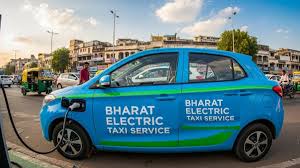
Bharat Taxi Launch 2025 brings India’s first cooperative ride-hailing app, challenging Ola and Uber with fair fares, driver ownership & transparency.
The ride-hailing landscape in India is about to witness a major shift. The newly announced platform Bharat Taxi is positioned to challenge incumbents like Ola and Uber — and understanding its launch, business model, and competitive implications is essential for stakeholders across mobility, tech, regulation and investment.

1. What is Bharat Taxi?
1.1 Formation & Ownership
Bharat Taxi is being launched by a consortium of 8 major cooperatives through an entity called Multi‑State Sahakari Taxi Cooperative Ltd, registered on 6 June 2025.
Founding members include:
- National Cooperative Development Corporation (NCDC)
- Indian Farmers Fertiliser Cooperative Ltd (IFFCO)
- Gujarat Cooperative Milk Marketing Federation (GCMMF – “Amul”)
- Krishak Bharati Cooperative Ltd (KRIBHCO)
- National Bank for Agriculture and Rural Development (NABARD)
- National Dairy Development Board (NDDB)
- National Cooperative Exports Ltd (NCEL)
The authorised capital for the venture is ₹300 crore (≈ US$34 million) and the service is scheduled to roll out by end of 2025.
1.2 Key Features / Unique Model
- Driver-owned/co-operative model: The structure gives drivers membership/shareholding rights, rather than being mere “partners” as in traditional aggregator models.
- Transparent fare/commission model: Unlike aggregators that charge high commissions or apply surge pricing, Bharat Taxi is designed with minimal/intermediate–no commission, predictable fares, and less opaque model.
- App-based platform with government-backed digital infrastructure: The service will integrate with platforms such as DigiLocker, UMANG and the API Setu framework for identity verification and safe operations.
- Coverage strategy spanning both urban and rural/underserved areas: The model envisages moving beyond metro cities into smaller towns, aided by cooperative networks.
1.3 Timeline & Roll-out Plan
- Registration completed: June 2025.
- Soft launch expected in November 2025; larger rollout December in places like Delhi and Gujarat.
- Onboarding of drivers already started: about 200 drivers across four states (Delhi, Gujarat, Uttar Pradesh, Maharashtra) early phase.
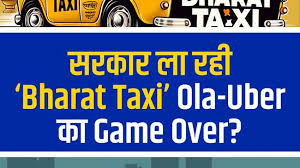
2. Why Launch Bharat Taxi Now?
2.1 Market Context
- India’s ride-hailing market has grown enormously. It is estimated to grow from ~US$20.5 billion in 2024 to ~US$61.5 billion by 2033.
- Despite growth, the dominant players (Ola, Uber) have faced criticism: high driver commission cuts, surge pricing, driver fatigue, regulatory scrutiny and fragmented governance across cities.
2.2 Policy & Cooperative Sector Push
- The launch aligns with the Indian Government’s push to strengthen cooperative governance models, promote “Atmanirbhar Bharat” (self-reliant India) in service sectors, and ensure equitable gains for workers/partners.
- By having no direct government equity and being fully funded by cooperatives, the model claims to be independent yet socially oriented.
2.3 Driver-Empowerment & Equitable Model
- A core driver (no pun intended) is to ensure better returns for drivers through ownership and fairer share of fares and affordable services for passengers via transparent pricing.
- Many drivers have raised concerns about opaque policies and uneven treatment in current aggregator models.
2.4 Competitive Disruption
- With dominant players entrenched, new entrants must offer structural differentiation; the cooperative model and driver-ownership approach may create such differentiation.
- Lower commission / transparent fares may undercut existing pricing models and attract price-sensitive riders.
3. How Bharat Taxi Differs from Existing Ride-Hailing Models
| Feature | Bharat Taxi | Traditional Aggregators (e.g., Ola, Uber) |
| Ownership & Governance | Drivers are members/co-owners in cooperative structure. | Drivers are “partners” but have little ownership or governance control. |
| Commission / Fees | Minimal or nominal membership fee; no large per-ride commissions claimed. | Many have high commission rates; also apply dynamic pricing, surge. |
| Pricing & Surge | Transparent pricing, limited surge, predictable fares promised. | Surge pricing common; fares vary widely by time/demand. |
| Focus & Reach | Urban + non-metro/under-served; cooperative reach via local societies. | Strong in metros; expansion in smaller cities but often with thinner density. |
| Technology & Integration | App plus integration with government infrastructure (DigiLocker, UMANG) for identity, safety. | App-based; private tech stack; varying regulatory compliance across states. |
| Profit/Surplus Model | Surplus expected to accrue to cooperative/driver members, not only external investors. | Profits go to platform investors/owners; drivers generally not stakeholders. |
These distinctions may seem subtle but they are fundamental to business model, cost structure, brand positioning and competitive dynamics.
4. Competitive Landscape – Strengths, Opportunities & Threats
4.1 Strengths & Opportunities
- Cost advantage: With lower commission overheads and transparent pricing, Bharat Taxi may be able to offer more competitive fares while still improving driver earnings.
- Driver loyalty/ownership: A cooperative ownership model may yield higher driver satisfaction, lower churn, and better service quality (which in turn improves customer retention).
- Untapped geographies: By focusing not just on big metros but also tier-2/3 cities and rural links, Bharat Taxi can access underserved markets and grow volume.
- Positive brand and social narrative: The cooperative model and government-backed infrastructure may resonate with socially-conscious riders/drivers and regulators.
- Regulatory goodwill: Given policy alignment with Indian cooperative thrust and “Make in India / Atmanirbhar” agenda, potential smoother regulatory environment.
- Disruption of current commissions model: Existing players may be forced to adjust pricing/commission structures, giving Bharat Taxi first-mover advantage in cooperative segment.
4.2 Threats & Competitive Risks
- Entrenched incumbents: Ola and Uber already have large network effects, driver volumes, brand recognition, and deep pockets. Overlooking that is risky.
- Scaling challenge: Achieving critical mass (drivers + riders) quickly across many cities is hard. If network density is low, wait-times and service will suffer.
- Technology and UX lag: App, routing, driver‐matching, payments, surge management are all hard tech problems. If Bharat Taxi lags, user adoption may suffer.
- Financial sustainability: Lower fares and lower commissions may squeeze margins. Ensuring profitability while scaling and maintaining vehicle/driver quality will be tough.
- Regulatory & state challenges: Each Indian state has its own taxi/ride-hailing regulations; cooperatives may face local licensing, permit, fleet composition issues.
- Brand risk and consumer trust: New service will need to match reliability, safety & convenience of incumbents. Any early flaws will harm adoption.
- Driver acquisition & on-boarding: Convincing drivers to switch from known platforms to an untested one might be difficult; driver incentives will matter.
- Competitive response: Ola/Uber may react aggressively (pricing wars, better driver incentives, expansion into cooperative models themselves) making market dynamics more intense.
5. Key Strategic Implications
5.1 For Drivers
- Potentially higher take-home earnings due to cooperative shareholding and lower commissions.
- Ownership stake and say in governance may increase job satisfaction and retention.
- However, drivers will also need to cope with new processes, possible slower ramp-up, and possibly lower early ride volumes/earning until network grows.
5.2 For Passengers
- More transparent fares, fewer surprises (surge pricing), better value for money.
- Access in smaller cities/regions may improve as pilot expands.
- But early experience may also include limited vehicle availability, longer wait times, or fewer service choices compared to incumbents.
5.3 For Existing Platforms (Ola, Uber)
- Need to improve their driver value proposition (commissions, incentives) to avoid driver attrition.
- May face pressure on fare pricing, especially if Bharat Taxi aggressively undercuts in key markets.
- Could spark innovation/partnerships (for instance, cooperatives within their ecosystems) or direct competition on driver ownership models.
- Network effect advantage remains strong for incumbents, but this cooperative model may erode driver-side loyalty.
5.4 For Regulators & Government
- Opportunity to promote inclusive mobility, driver welfare and cooperative governance in the gig economy.
- Ensures alternative to purely VC/foreign-owned platforms and keeps more value within the Indian economy.
- Need to monitor for service quality, safety standards, data/privacy compliance (given app integration with government platforms).
- Potentially a template for other sectors (delivery, logistics, shared services) to adopt cooperative platform models.
6. Challenges & Risks for Bharat Taxi
- Achieving scale: The “network effect” is critical. Until thousands of drivers + riders are onboarded in each city, wait-times and service quality may lag.
- Driver and vehicle quality: Ensuring vehicles meet standards, drivers have training and ratings are maintained.
- Tech reliability & user experience: App stability, payment processing, localization (multi-language), mapping, customer support and safety features all matter.
- Fleet financing & asset ownership: Who owns the vehicles? Will drivers have to finance them? How will maintenance and replacement be handled? These costs impact driver earnings and service quality.
- Pricing sustainability: If fares are kept low to build volume, margin pressure may hit sooner unless cost structure is very lean.
- Regulatory heterogeneity: Each Indian state/UT has its own rules for taxi operations. Coordinating across 30+ states is complex.
- Competitive retaliation: Existing players could engage in aggressive pricing, driver incentives or innovations (e.g., subscriptions, EV fleets) making the competitive terrain harder.
- Brand trust & adoption speed: Riders may be hesitant to switch from established brands unless Bharat Taxi clearly demonstrates reliability, convenience and value. Early negative experiences could damage the brand permanently.
7. Implications for the Future of Ride-Hailing in India
- The launch of Bharat Taxi may mark a paradigm shift: from venture-backed aggregator platforms to cooperative, driver-owner models. If successful, this could inspire similar structural changes in other gig economy verticals.
- It may accelerate fare and commission reforms in the industry: incumbents may need to reduce driver commissions, eliminate abusive surge pricing, increase earnings transparency.
- Expansion into tier-2/3 cities, rural mobility and underserved regions may accelerate, improving inclusive mobility.
- Data & technology infrastructure: integration of national identity/verification systems (DigiLocker/UMANG) may standardise ride-hailing safety and compliance across India.
- The competitive landscape may become more multi-modal and diverse, with different business models (subscription, cooperative, vehicle-owner vs. driver-owner, EV fleets) co-existing rather than a duopoly.
- For drivers, the model offers greater empowerment. For policymakers, it is an experiment in inclusive platform economics and cooperative governance.
- However, if Bharat Taxi fails to scale quickly or deliver quality, it may simply replicate the same challenges incumbents face — network effects, cost pressures, driver attrition — and may become a cautionary tale rather than a disruptor.
8. Conclusion
The introduction of Bharat Taxi is not merely another entrant in India’s ride-hailing market — it is a structural experiment in how mobility services can be organized, who benefits (drivers vs. investors), and how fares/commissions are determined.
For incumbents like Ola and Uber, the cooperative model presents a credible threat: if drivers switch allegiance and passengers find comparable service at lower cost, the network advantage may erode.
For stakeholders (drivers, passengers, investors, regulators), key watch-points in the coming 12–18 months will include: how rapidly Bharat Taxi scales, the quality of service it delivers, the earnings of drivers under its model, and how existing players respond.
From an SEO/blogging perspective, keywords to target include: “Bharat Taxi launch”, “cooperative ride-hailing India”, “India taxi app 2025”, “Bharat Taxi vs Ola Uber”, “driver-owned taxi platform India”.
Given your blog-content goals, publishing in English will reach the broadest national audience (metro + non-metro) and best suit SEO across India, though using some Indian-English or Henglish idioms could lend local flavour and engagement.
For more such amazing content visit : https://newseeker.insightsphere.in/






Post Comment