Zubeen Garg: More than a Singer

He was not only a playback singer. He wore many hats:
- 🎵 Composer – Created original Assamese and Hindi albums.
- 🎤 Performer – His live shows were electrifying; fans danced till midnight.
- 🎬 Actor & Director – Worked in Assamese cinema and supported regional film growth.
- ❤️ Social Worker – Donated for flood relief, opened his home during COVID-19, raised funds through concerts.
Whenever Assam faced a crisis, Zubeen da was always there. He was a singer with a conscience.
Voice of Protest, Voice of the People
In 2019, during the Anti-CAA protests in Assam, Zubeen openly stood with the people. He became a symbol of cultural resistance. For him, art was not just about entertainment — it was about truth.
Even in controversies, he never hesitated to speak his mind. That honesty is what fans loved most about him. He was real, flawed, bold, yet deeply human.
The Tragic End
On 19th September 2025, while scuba diving in Singapore during the Northeast India Festival, Zubeen felt uneasiness and collapsed. He was rushed to Singapore General Hospital but could not be saved. At just 52, he left this world.
His passing shocked not just Assam, but the entire nation. Tributes poured in from singers like Pritam, Armaan Malik, Vishal Dadlani, and millions of fans worldwide. Social media flooded with one line: “Zubeen da amar rahibo” (Zubeen da will remain immortal).
Top 10 Songs of Zubeen Garg (With Stories)
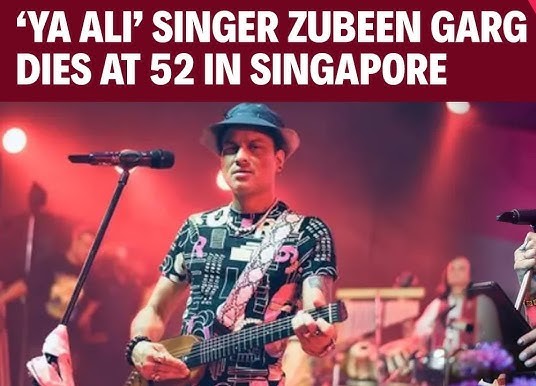
Here’s a look at the songs that define his magical journey:
- Maya (1994) – His debut album’s title song, which gave him the tag of Maya Baladere.
- Ya Ali (Gangster, 2006) – The Bollywood track that took him global.
- Pakhi (2000) – A heart-wrenching Assamese ballad, often described as the “anthem of broken hearts.”
- Mon Hobo Aji (1999) – A song of longing, often played during Assamese Bihu evenings.
- O Bhabona (Bengali) – Proved his mastery in Bengali music and won him fans in West Bengal.
- Dil Tu Hi Bata (Krrish 3, 2013) – Bollywood duet with Alisha Chinai, showing his versatility.
- Anamika (Assamese album) – Another cult Assamese album, cherished by youth.
- Pyaar Ka Tohfa (Album) – A Hindi pop experiment that showed his crossover appeal.
- Ei Prithibi Ekhan Krirangan (1992) – Inspirational Assamese track, meaning “The world is a playground.”
- Boga Jobona (Folk) – Showed how deeply he could blend with traditional Assamese tunes.
Each of these songs carries a memory — of college festivals, train journeys, heartbreaks, protests, and celebrations.
What Fans Remember: Tributes
- “For us, Zubeen da was not a singer. He was our childhood, our youth, our festivals.”
- “Every Assamese hostel had his poster and guitar songs echoing late into the night.”
- “Ya Ali gave him India, but Maya gave him eternity.”
At his concerts, thousands sang along, often louder than him. That was his power — he made listeners feel like they too were singers.
Legacy of Zubeen Garg

- Cultural Icon of Assam – He put Assamese music on India’s cultural map.
- Inspiration for Youth – Showed young artists that regional identity can be global.
- Bridge of Languages – His ability to sing in 40+ languages made him a pan-Indian figure.
- Social Voice – He proved music can protest, heal, and unite.
Even though he is gone, his songs will keep echoing in tea gardens, in Bihu dances, in Bollywood playlists, and in the quiet corners of our hearts.
Conclusion: An Eternal Voice
Zubeen Garg’s journey teaches us that true music is not about fame, but about connection. He connected Assam to India, India to the world. He connected hearts to hearts.
As fans say: “Zubeen da nahi gaya, bas ek naya sur ban gaya.” His physical presence may have left, but his voice will forever stay immortal.
FAQs about Zubeen Garg
Q1: What was Zubeen Garg’s biggest hit in Bollywood?
Ya Ali from Gangster (2006) was his most popular Bollywood track.
Q2: Which was his first Assamese album?
His debut Assamese album was Maya in 1994.
Q3: How many languages did he sing in?
Zubeen sang in 40+ languages, including Assamese, Hindi, Bengali, Tamil, Telugu, Nepali, and Marathi.
Q4: Was Zubeen Garg only a singer?
No, he was also a composer, music director, actor, and social activist.
Q5: What is Zubeen Garg’s legacy?
He remains the cultural heartbeat of Assam, a symbol of regional pride, and one of India’s most versatile artists.
For more such amazing content visit : https://insightsphere.in/




Post Comment