When Nations Burn: Lessons from Nepal and France’s 2025 Unrest
When Nations Burn: Lessons from Nepal and France’s 2025 Unrest
When citizens take to the streets, when government buildings are set on fire, and when police and soldiers are deployed to control crowds — it is not just an ordinary protest. It signals a deep rift between people and politics.
In September 2025, Nepal and France both witnessed this rift explode into violent unrest. In Nepal, angry youth filled the streets of Kathmandu. In France, the “Block Everything” movement turned the country upside down.
Though Nepal and France are worlds apart in geography, culture, and governance, the roots of their unrest look surprisingly similar. And that similarity tells us something important about the challenges modern democracies face today.
What Happened in Nepal?
Nepal was already politically fragile, with unemployment, corruption, and instability frustrating its people.
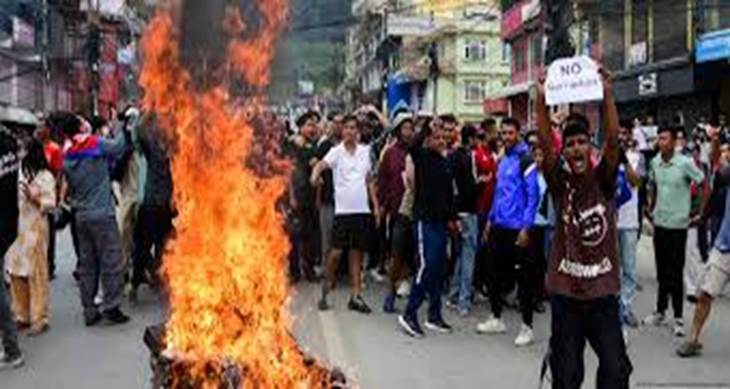
- Social media ban – The government suddenly restricted internet and social media platforms. For young people, this was like taking away their biggest voice.
- Protests and violence – Anger spilled into the streets. Government offices and vehicles were set on fire.
- Clashes with security forces – Police and the military responded with force. Curfews were imposed.
- Heavy toll – Dozens were killed and hundreds injured.
- Political result – The crisis grew so severe that Prime Minister K.P. Sharma Oli was forced to resign.
Nepal’s story shows how when governments fail to communicate with citizens, even a small spark — like an internet ban — can set the whole system on fire.
What Happened in France?
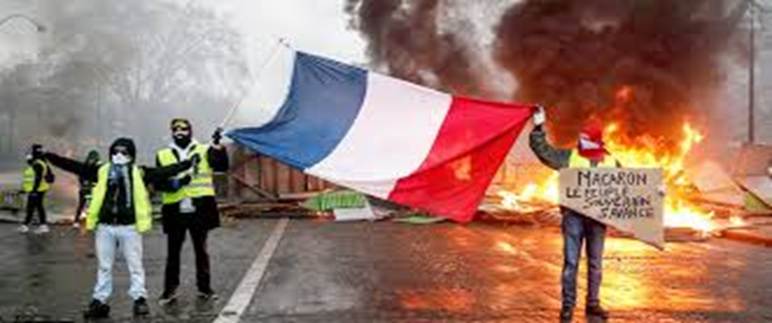
In France, protests came under the banner “Block Everything.” This was not sudden anger, but rather the result of frustration that had built up for years.
- Main causes – Rising cost of living, government budget cuts, and deep distrust of political elites.
- Protest style – People blocked streets, burned trash bins, and even set a bus on fire.
- Disruptions – Strikes and demonstrations disrupted schools, transport, and offices.
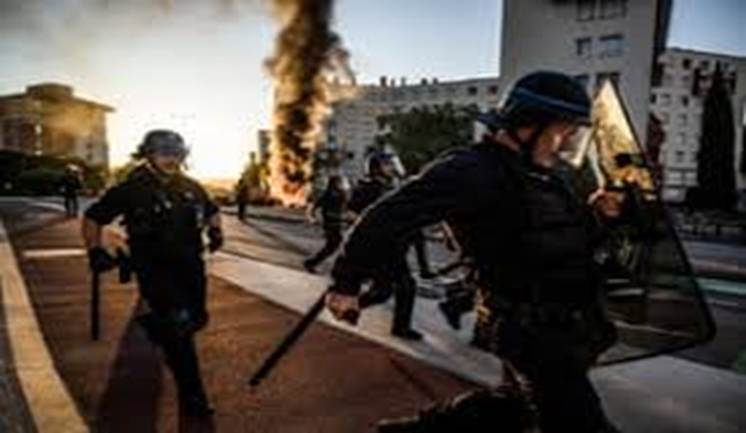
- Government reaction – Tens of thousands of police were deployed, and hundreds were arrested.
France’s protests show how long-standing frustration can suddenly boil over into mass movements that paralyze everyday life.
Why Did Both Nations “Burn”?
Despite their differences, both countries’ unrest came from similar roots.
1. Digital Spark
- Nepal: Anger erupted after the government banned social media.
- France: The movement itself spread through social media platforms.
Lesson: The internet is now the beating heart of modern protest.
2. Youth Anger
In both cases, young people were the driving force.
- Nepal: No jobs, but high corruption.
- France: Rising costs and shrinking opportunities.
3. Economic Pressure
When life becomes unaffordable, frustration turns political. Both countries faced economic stress that made people’s anger stronger.
4. Spread of Movements
Protests today don’t remain local. They spread like a wildfire through social media, with tactics, slogans, and energy traveling across borders.
Key Differences
1. Outcomes
- Nepal: The unrest was so severe that the prime minister resigned.
- France: The government survived, thanks to stronger institutions like unions, courts, and parliament.
2. Government Response
- Nepal: Security forces used lethal force, raising human rights concerns.
- France: Heavy policing and arrests, but within a legal and institutional framework.
3. Spark vs. Long-Building Anger
- Nepal: The sudden spark of a social media ban.
- France: Anger that had been growing for years exploded under a new banner.
The Role of Social Media: Friend or Foe?
In both countries, social media shaped events:
- In Nepal, banning it inflamed the situation.
- In France, activists used it to mobilize people nationwide.
This shows that digital platforms are no longer just for entertainment — they are now tools of politics, protest, and power.
Risks Ahead
- Rising violence – Normalizing arson and attacks can create endless cycles of retaliation.
- Political instability – Like in Nepal, governments may collapse under pressure.
- Human rights concerns – Deaths and arrests without fair investigation damage long-term trust.
- Economic losses – Strikes, shutdowns, and destruction of property weaken already struggling economies.
What Can Governments and Societies Do?
- Choose dialogue over force
Governments must openly communicate with citizens, especially the youth. - Protect digital freedom
Internet shutdowns backfire. Instead, governments should focus on transparency and digital literacy. - Practice restrained policing
Force should be the last resort, and every action should be independently reviewed. - Address long-term problems
Jobs, education, and corruption require genuine reform — not just quick fixes. - Promote fact-checking and civic education
Misinformation can fuel unrest. Societies need strong media, education, and fact-checking systems.
Conclusion: Different Countries, Same Fire
Nepal and France may belong to different continents, languages, and systems of governance. But the unrest in 2025 proved one simple truth: when people feel ignored, when economic stress rises, and when trust in leaders collapses, streets become the only outlet.
In Nepal, a sudden social media ban shook the government to its core. In France, years of built-up frustration exploded under the banner of “Block Everything.”
The lessons are clear:
- Suppressing voices only makes anger stronger.
- Honest dialogue and reform are the real solutions.
- Youth need opportunities and respect, not silence and repression.
If governments take these lessons seriously, the flames of unrest can be controlled. If not, the fire will keep spreading, leaving long scars on politics and society.
For more such amazing content visit : https://insightsphere.in/





Post Comment