Rainy Season and Diet: A Healthy & Tasty Journey
The arrival of the monsoon fills everyone’s heart with joy. Sitting by the window with a hot cup of tea, listening to the sound of raindrops, and enjoying crispy pakoras – that’s the real charm of this season.
But along with this romantic vibe, the rainy season also brings the highest risk of bacteria, viruses, and infections. That’s why, in this weather, it’s not just about enjoying the mood but also about protecting your health.
So let’s find out – what to eat and what to avoid during the rains, which vegetables and fruits are safe, and what precautions you should take before eating.
- Vegetables in the Rain – Choose Wisely
The wet soil of the rainy season makes vegetables more prone to worms and bacterial growth. That’s why extra care is needed while selecting and preparing them.
Safe Vegetables:
- Ridge gourd, bottle gourd, pointed gourd, bitter gourd, capsicum
- Leafy greens like spinach – but only if washed thoroughly
Precautions:
- Soak vegetables in salt or turmeric water for 15–20 minutes before cooking.
- Avoid eating raw salads (like cucumber, tomato, radish) sold openly outside.
Benefit: Easily digestible vegetables provide essential vitamins and minerals.
Consequence: Unclean or contaminated veggies may cause stomach pain, diarrhoea, or food poisoning.
2. Seasonal Fruits – Nature’s Medicine
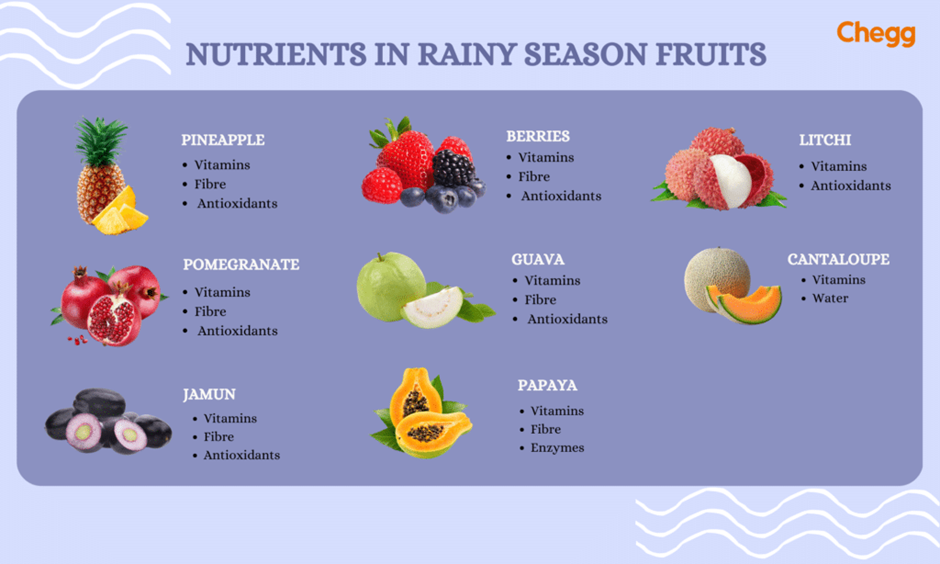
During monsoon, fruits like apple, guava, pear, pomegranate, papaya, and sweet lime are the healthiest and safest options.
Why eat them?
- Rich in Vitamin C – boosts immunity
- Papaya improves digestion
- Pomegranate & guava protect against bacterial infections
Avoid roadside cut fruits or juice stalls – they are a hub of infections.
3. Grains & Light Meals
Digestion becomes weaker during rains, so opt for light and easily digestible food.
- Khichdi, porridge, oats, and moong dal are soothing and nutritious.
- Roasted gram and fox nuts (makhana) provide energy and protein.
Heavy, oily, and fried foods are harder to digest and can trigger acidity and bloating.
4. Warm Beverages – The Real Monsoon Companion
Instead of cold drinks and ice creams, enjoy warm and soothing beverages.
- Ginger-Tulsi tea, turmeric milk, soups, herbal teas
- These keep the body warm and prevent cough & cold
5. Milk & Dairy Products
- Milk, paneer, and a little curd are good sources of protein and calcium.
- Avoid chilled lassi and ice creams as they may trigger throat infections.
6. Spices & Herbs – The Natural Shield
Add immunity-boosting spices to your diet:
- Ginger, garlic, turmeric, black pepper, cinnamon, basil, giloy
They act like natural antibiotics and protect the body from seasonal infections.
7. Nuts & Seeds
- Almonds, walnuts, flax seeds, sunflower seeds – provide energy for both body and brain.
8. Healthy Snacks – Tasty Yet Safe
When you crave something spicy during the rain:
- Opt for boiled corn, idli, dhokla, steamed momos – light and safe snack choices.
- What Not to Eat in the Rainy Season?
- ❌ Street food
❌ Oily & overly spicy dishes
❌ Raw salads (if not washed properly)
❌ Ice creams & cold drinks
- The Monsoon Mantra
- The golden rule of eating in the rainy season is:
- “Eat fresh, eat light, eat warm.”
- ✔️ Choose vegetables wisely
✔️ Include seasonal fruits
✔️ Drink warm beverages & eat light grains
✔️ Use herbs & spices as your natural protection
✨ With mindful eating, the rainy season can be both a flavourful journey and a shield of health.






Post Comment