Countries That Share Their Independence Day with India – 15 August
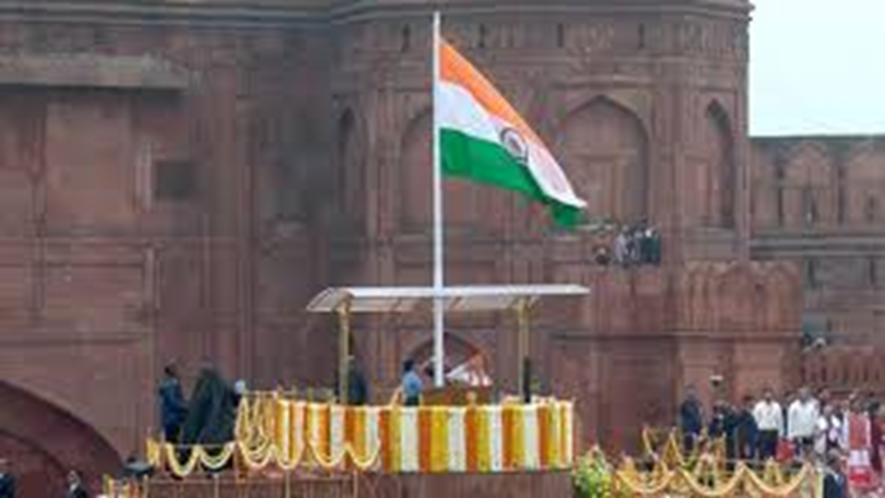
Discover which countries share their Independence Day with India on 15 August. From Asia to Africa to Europe, explore their histories, celebrations, and why this date has global importance.
One Date, Many Freedoms
Every year, on 15 August, the tricolour flutters proudly over India’s skies. Streets fill with patriotic songs, children wave flags, and millions remember the sacrifices that brought freedom in 1947. But here’s something most people don’t know — India is not alone in celebrating Independence Day on 15 August.
Across oceans and continents, other nations also mark this day as their moment of liberation. Their histories may differ — some escaped colonial rule, others ended decades-long occupations — but the date is the same. It’s a global reminder that freedom knows no boundaries.
As Jawaharlal Nehru said in his famous “Tryst with Destiny” speech:
“At the stroke of the midnight hour, when the world sleeps, India will awake to life and freedom.”
Interestingly, while India was awakening, other nations were also marching towards their own dawn of independence. Let’s explore which countries share their Independence Day with India, and why this date is such a historical magnet.
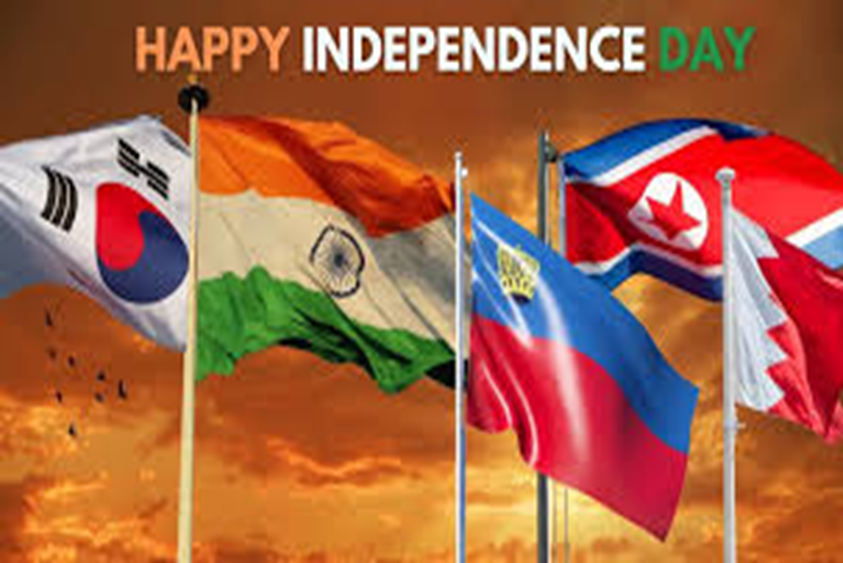
1. South Korea – Liberation from Japanese Rule
- Year of Independence: 1945
- Historical Background: Korea endured 35 years of Japanese occupation, from 1910 to 1945. On 15 August 1945, Japan surrendered in World War II, and Korea finally regained its sovereignty.
- Local Name: Gwangbokjeol – meaning “Restoration of Light Day.”
- Celebrations: Flag-hoisting ceremonies, patriotic parades, cultural performances, and the singing of the national anthem. Citizens also remember the freedom fighters who sacrificed their lives.
- Interesting Connection: Just like India, Korea’s independence came in the wake of global political shifts after WWII, making 15 August a shared symbol of liberation in Asia.
2. Bahrain – End of British Protection
- Year of Independence: 1971
- Background: Bahrain had been under British protection since the 19th century. On 15 August 1971, it formally declared independence and later joined the United Nations.
- Celebrations: Although Bahrain’s official National Day is observed in December, 15 August remains historically important. Festivities include fireworks, parades, and heritage exhibitions.
- Little-Known Fact: Bahrain’s decision to choose its National Day in December was to coincide with the king’s accession, but historians still regard 15 August as the true liberation day.
3. Republic of Congo (Congo-Brazzaville) – Freedom from France
- Year of Independence: 1960
- Historical Context: For decades, the Republic of Congo was part of French Equatorial Africa. On 15 August 1960, the country officially became independent.
- Celebrations: Military parades, speeches by leaders, concerts, and traditional dance performances fill the streets.
- Shared Spirit with India: Both nations celebrate breaking free from colonial dominance, though under different empires — India from Britain, Congo from France.
4. Liechtenstein – National Day on 15 August
- Year First Celebrated: 1940
- Reason for Date: The date combines the Feast of the Assumption (a Catholic holiday) with the birthday of Prince Franz Josef II, creating a unique National Day.
- Celebrations: The royal family personally mingles with citizens, fireworks light up the sky, and people enjoy open-air concerts and local food.
- Fun Fact: Liechtenstein is so small that it has no airport, yet it shares its biggest day of the year with one of the largest democracies in the world — India.
Why 15 August Became a Global Date for Freedom
The mid-20th century was a turning point in world history. Empires crumbled, colonies rose, and nations reclaimed their identities. The end of World War II accelerated this process, leading to a wave of independence movements across Asia, Africa, and beyond.
Historian A.J.P. Taylor once wrote:
“The history of the world is the history of wars fought for liberty.”
For India, 15 August 1947 meant the end of nearly 200 years of British colonialism. For South Korea, 15 August 1945 meant liberation from Japan’s grip. For Congo, 15 August 1960 meant the French tricolour was lowered for the last time. For Bahrain, it was the end of decades-long British influence. And for Liechtenstein, it became a unifying celebration of national pride.
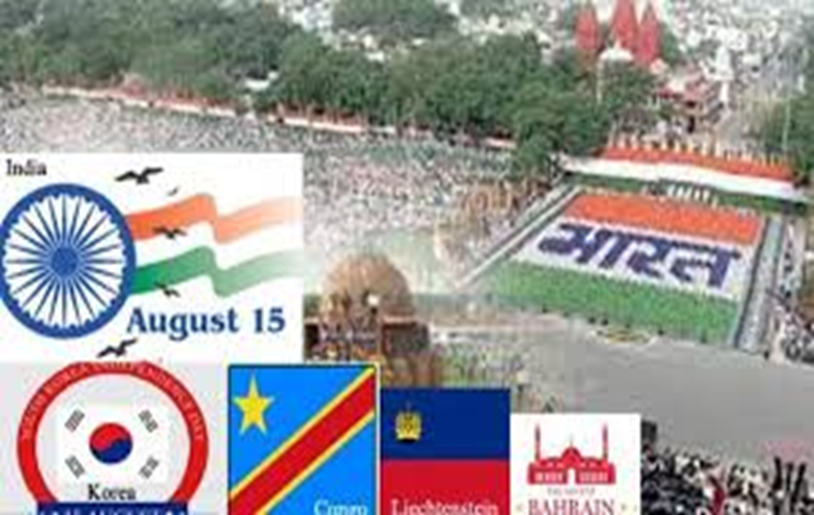
Different Cultures, One Shared Emotion
Although the way each country celebrates varies greatly, the emotional core is the same — gratitude for freedom, pride in the nation’s journey, and remembrance of sacrifices.
- In India, children dress in saffron, white, and green, kites fill the skies, and speeches recall the courage of freedom fighters like Bhagat Singh, Rani Laxmi Bai, and Mahatma Gandhi.
- In South Korea, people visit historical monuments, sing liberation songs, and display their national flag, the Taegeukgi, in every household.
- In Bahrain, city streets shine with lights, and citizens engage in cultural performances and family gatherings.
- In Congo, the mood is festive with African drumming, dancing, and parades.
- In Liechtenstein, the celebration feels intimate — the prince himself walks among the crowd, symbolizing unity between the monarchy and the people.
Countries Sharing Their Independence Day with India – At a Glance
| Country | Year of Independence | From |
| India | 1947 | British Rule |
| South Korea | 1945 | Japanese Occupation |
| Bahrain | 1971 | British Protection |
| Republic of Congo | 1960 | French Rule |
| Liechtenstein | National Day | – |
Global Unity Through a Date
It’s fascinating to think that on 15 August, the skies over Asia, the Middle East, and Africa glow with fireworks for different nations — yet all for the same reason: freedom.
This date teaches us that independence is not just a national achievement but a shared human aspiration. While flags, languages, and cultures differ, the longing to live free is universal.
As Nelson Mandela once said:
“For to be free is not merely to cast off one’s chains, but to live in a way that respects and enhances the freedom of others.”
Conclusion
From the bustling streets of Delhi to the quiet valleys of Liechtenstein, from the celebrations in Seoul to the parades in Brazzaville, 15 August unites diverse nations in the spirit of liberty. These countries, each with its unique story, remind us that freedom is hard-earned and worth cherishing every single year.
So, the next time you celebrate India’s Independence Day, remember — somewhere in the world, another nation is raising its flag, singing its anthem, and feeling the same pride you do.
For more such amazing content visit : https://insightsphere.in/






Post Comment